
|
In summer I researched and wrote a new resource for history and heritage educators on behalf of Curious Minds. Drawing together examples from across the North West, covering an array of indoor and outdoor museum and heritage locations, it explores how schools and heritage organisations have worked together to help young people learn about their local history in cross-curricular ways. It's particularly relevant to the Key Stage 2 curricula but extends to KS1 and KS3 too. Browse or download above, or from my resources page.
Each case study includes - Description of a topic or activity - Objectives and outcomes of the activity - Practical activity suggestions to include in topics / lesson plans - Top tips for planning and practicalities - Links to further resources Includes five example case studies of projects by schools and museum or heritage sites working together cover these overarching themes: - Investigating a heritage site (through the ages and a timeline) - Investigating a local street (in this instance Victorian but transferable to other periods) - Investigating a historical period (Stone, Bronze and Iron ages) - Creative engagement with maths (using the art / design of Blackpool Illuminations to cover the full KS1 & 2 maths curriculum) - Exploring the local town (in this instance a coastal town with a migratory mining history) Current History links - the lives of significant individuals in the past who have contributed to national and international achievements - significant historical events, people and places in their own locality - changes in Britain from the Stone Age to the Iron Age - a study of an aspect or theme in British history that extends pupils’ chronological knowledge beyond 1066 - ideas, political power, industry and empire: Britain, 1745-1901 With a foreward from Prof. Kerri Facer - education innovator and advocate for place-based curricula.
0 Comments
 I am so very lucky to be able to get involved with such a wide variety of projects. In each one I love to find out about new collections, artworks, exhibits, activities and the people behind them or indeed at the receiving end.
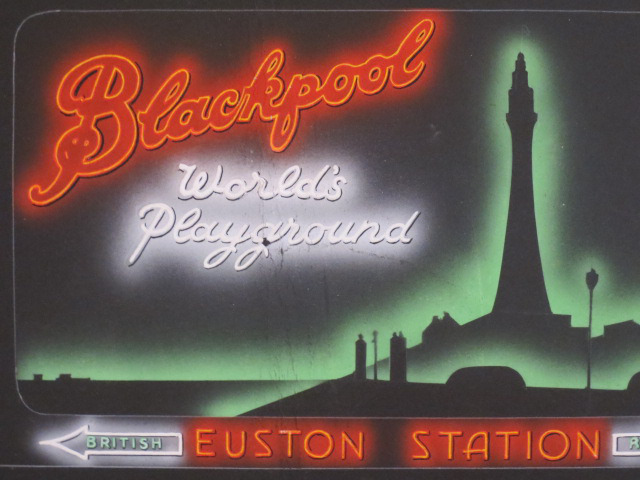
Right now I'm writing a resource pack for Curious Minds which looks at how local heritage can be used to work with schools towards an area based curriculum. The resource will include several case studies, one of which features Blackpool Illuminations. It's little known that the Illuminations have a historic archive, or that they are all designed and made in Blackpool itself, at a design and manufacture depot called Lightworks. You might like to read this excellent page about where the magic happens. Many images from the archive of illuminations artwork and some accompanying catalogue detail is available at the Illuminations blog right here. On occassion, Lightworks opens up for tours for special events and groups such as Heritage Open Days. A potted history of the illuminations is provided here. Further information is available here. Meanwhile, the Curious Minds resource, and another teaching resource produced by cultural team members of Blackpool council offering many ways to use the illuminations to support maths based learning - developed in close consultation with teachers, will all be available online to download as a pdf in due course. Image: Up for Promotion, copyright Blackpool Illuminations Collection 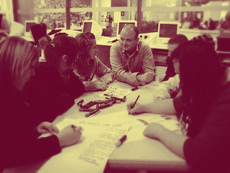 Image from an interactive, multisensory learning project I once ran. Image from an interactive, multisensory learning project I once ran. Massively vital reading for teachers (even more so secondaries). This insightful post by Alexis Wiggins, was original scripted anonymously. She later outed herself - rightly so, absolutely nothing here to hide!
She starts with, "I have made a terrible mistake. I waited fourteen years to do something that I should have done my first year of teaching: shadow a student for a day. It was so eye-opening that I wish I could go back to every class of students I ever had right now and change a minimum of ten things – the layout, the lesson plan, the checks for understanding. Most of it!" She goes on to describe her experience and provide 3 key learning points, each with practical suggestions to her past and future self, and all other teachers out there. Read it and then do it. And then if you can, get your managers / heads / team to read and do it too. Some of you will already include some of these things in your practice but I guarantee some will be new inspiration. I'd also extend the basic principle to all people who work with audiences, customers, learners, pupils, participants etc... when was the last time you walked in their shoes. Turn the tables on yourself and see what you can improve. There's already some discussion of this going on on my Facebook page if you want to join in... *here* 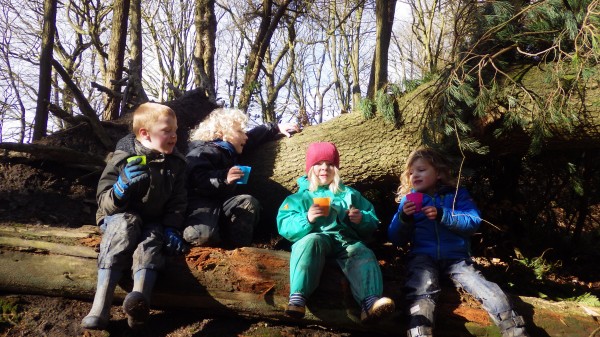 Lovely post from EarlyartsUK on The Wild Classroom - whys and hows and what it looks like and why, most of all, not to be afraid of the wilderness! Let's get more kids out there...
I'm really struck today by why artists / schools often feel a need to 'dumb down' what's possible - so many simple mosaics, hand prints, flowers, butterflies... there's nothing wrong with those, but it's as though there's an assumption that children aren't capable of getting wrapped up in ideas, thoughts, concepts, challenge, investigation, invention and processes. I know that they are, that they can handle more conceptual art than many adults, that ideas and possibility makes them buzz. So where is it that these limitations come from? Maybe it's the adults who are scared? Should we take a step back and learn from what the children can unlock for us? I'm just saying, let's not always fall back on the lowest common denominator.
You can read more comments and join in this conversation over on Facebook here... Look what my lovely friends at MOSI have done for all you wonderful teachers. Roll up roll up, bring all your finest young imagineers! 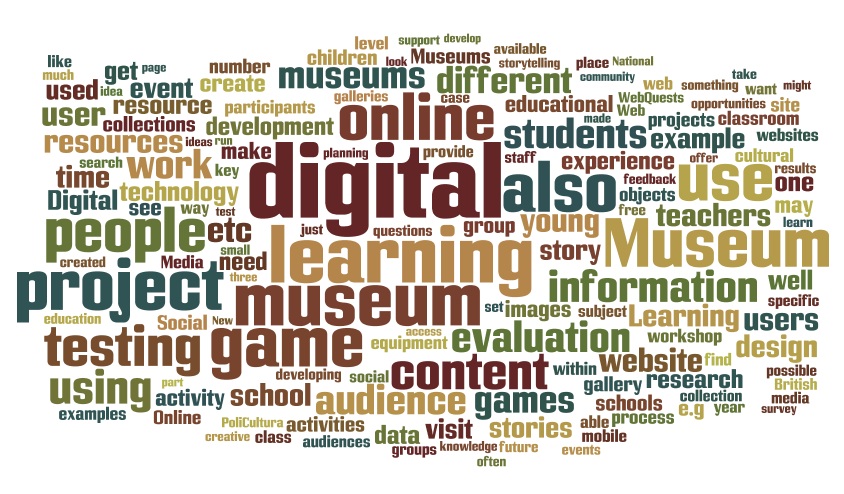
I'm just wrapping up some research for a museum. They asked me to collate case studies of good and innovative practice in how comparable venues (which in this case include medium-large scale museums and galleries) use digital technology to support school visits, in workshops, self-directed studies and potentially back in school.
They also wanted to find out about the ways such activity can be evaluated. They absolutely do not want to have form after form handed to teachers and students, and wondered how else really good evaluation might take place. The brief contains phrases like blended learning and e-learning. It's problematic because there are no clear definitions of what those are and where they start and end, And it's a real rabbit hole - an entire and massive area of specialisation and expertise. It's a small piece of work, just skimming the surface to help the museum think in new and different ways about what they might do, and how to monitor its impact well. I've collated 64 pages, over 32,000 words, of case studies of applications, programmes, projects, reviews and industry expertise opinions on contextual issues such as evaluation, future proofing and general good practice in digital learning and engagement. I've visited more websites, read more conference papers, searched more forums than I can count and interviewed some really insightful and inspiring colleagues in the field. Eventually, if the museum in question has no objections, I'll upload the collated set of case studies and expertise here for anyone else who might like it. It will be in a very rough and ready format - just my research notes really, in no particular order. But it may be of some help to someone so watch this space... In the meantime, it seemed much easier to put all 32k+ words into wordle and see what happened. There it is above, that's what the whole shebang amounts to. Interesting at this stage that 'online' is so prominent, given that I wasn't specifically looking at just online options. Interesting too that if 'conversation', 'collaboration' or 'participation' are in there, they certainly don't jump out. Teachers in Merseyside and Pennine (East) Lancs applying for Artsmark or Artsmark Gold are now able to book on to training sessions in their area.
Teachers from other areas are also welcome (though may find training closer to home via the Artsmark website). Merseyside Training: Monday 17th October. Pennine Lancs Training: Tuesday 1st November. Read more here or go straight to online booking via the links below. Merseyside training: book here Pennine Lancashire training: book here  This year I'll be working as a trainer for schools in the North West applying to the new Artsmark scheme. Arts Council England have selected and trained a group of arts education specialists across the country to offer training to teachers, to help them with applications for the revised Artsmark scheme.
This training is authorised and endorsed by them, and is relevant to primary and secondary schools applying at Artsmark or Artsmark gold level* including all schools regardless of whether or not they have applied for or received the award before. (*Artsmark Silver does not exist within the new scheme). Save the date: Merseyside: Monday 17th October at the Bluecoat Centre, Liverpool Pennine Lancs: Tuesday 1st November at Burnley Youth Theatre, Lancs NB This will be the only Arts Council England authorised Artsmark training in these areas. Booking details will be announced shortly but do save the date now. Please contact me if you wish to reserve your place so you can begin arranging cover. Training will be at a fee of £80 / teacher for a full day including lunch, introduction to the arts education work of the host venue, and individually tailored support for your application. Full terms and conditions will be available online soon. Please don't hesitate to contact me with any questions. Find out more about Artsmark here. (To contact the Artsmark team, please find the appropriate contact details within the application documents.) I spent a huge amount of last year working with some amazing academic staff, researchers and community groups as they learned more about one another through creative projects as part of the Manchester Beacon for Public Engagement. My role was (and still is) to help what's happening at practice level link with a rather complex overarching evaluation framework. The Manchester Beacon programme is, in a nutshell, about encouraging learning institutions to better understand how to open themselves up to communities more effectively. An important part of that process is to trial new approaches and reflect on what works, or what could be improved. It's an action learning model really. The Beacon team and I identified that those involved in the practice needed support in being able to report back on their work in ways that fit the evaluation framework. So we set about producing some guidance for them, based on the input of community groups and a pilot cohort of academics and researchers. Fast forward many months and the evaluation guidance pack / toolkit I created with their help, and the help of other colleagues, is now freely available. It contains some basic principles of evaluation, hints and tips, templates, and examples of creative consultation. You can read or download it below; contact me for a copy; or read / download it here. On this page, you can also find some very short podcasts and top tips from some of the staff and community groups who have used the document. At the end of the pack there are also lots more links to further evaluation guidance in public engagement and also support created specifically for the fields of science communication; community engagement; arts and heritage; and health and wellbeing. All thoughts or comments welcome... |
...BlogI'm most interested in how the public, your public, whoever that may be, engages with culture and creativity.
And if it nurtures creativity and develops personal, social or professional skills I'm absolutely all ears. 
Categories
All
Archives
May 2023
|
 RSS Feed
